
Synchronizing Player Verification Protocols with Adaptive Reward Tiers in Regional Digital Reel Ecosystems
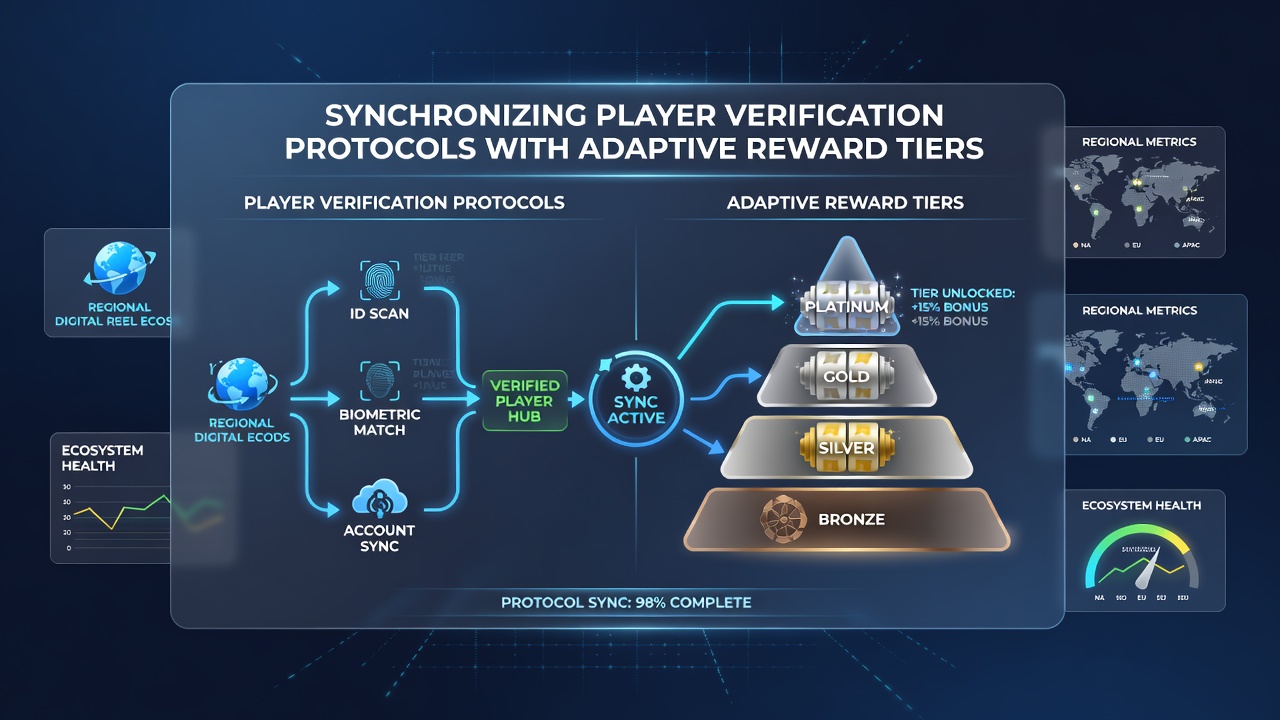
Regional digital reel ecosystems rely on coordinated verification protocols that align with adaptive reward structures to meet local regulatory demands while managing player engagement across jurisdictions. These systems process identification checks at account creation and then link ongoing verification data to reward adjustments that shift according to regional rules and player activity patterns. Observers note that platforms operating in multiple markets must update verification triggers whenever reward tiers activate new benefits or restrictions.
Regional Regulatory Frameworks and Verification Standards
European markets apply strict identification requirements under directives that vary by member state, and these rules connect directly to reward tier eligibility because certain promotions cannot activate without confirmed residency and age data. North American jurisdictions such as those overseen by the New Jersey Division of Gaming Enforcement require periodic re-verification when reward levels grant higher withdrawal limits or bonus multipliers. Australian frameworks administered through the Australian Communications and Media Authority tie reward progression to documented spending thresholds that verification systems must record in real time. Data from industry reports shows that synchronization failures often occur when reward algorithms update faster than verification databases refresh across time zones.
Technical Integration of Verification and Reward Systems
Platforms achieve synchronization through centralized databases that store verification status flags alongside reward tier parameters, allowing automated adjustments when a player crosses a spending threshold or changes geographic location. Application programming interfaces connect identity providers to loyalty engines so that tier upgrades trigger immediate compliance checks rather than batch processes at month end. Researchers at institutions studying gaming technology have documented cases where real-time API calls reduced verification delays from hours to seconds in multi-state deployments. Adaptive tiers adjust reward values based on regional tax rates and responsible gaming caps, and verification protocols must confirm that each player remains within those adjusted parameters before credits apply to accounts.
Implementation Patterns Observed in November 2026
Industry conferences held during November 2026 highlighted updates to verification modules that now incorporate biometric re-checks when reward tiers reach mid-level status in certain Canadian provinces. Operators reported that these checks prevent unauthorized tier jumps while maintaining compliance with provincial spending limits. Similar patterns emerged in Latin American markets where verification renewal intervals shortened for high-tier players whose reward structures include cross-border tournament entries. Figures released by regional gaming associations indicate that synchronized systems processed over 40 percent more tier adjustments without compliance incidents compared to earlier non-integrated models.
Challenges in Cross-Border Data Flow
Cross-border operations encounter latency when verification servers in one region must query reward databases hosted under different data residency laws, and these delays can freeze tier benefits until confirmation completes. Solutions include edge computing nodes that cache verification tokens locally while maintaining links to central reward engines. Studies published by academic groups tracking digital gaming infrastructure reveal that token caching reduced synchronization errors by measurable margins in test environments spanning three continents. Regional differences in data retention periods further complicate reward history tracking because some jurisdictions mandate shorter storage windows that affect long-term tier calculations.
Case Examples from Multiple Jurisdictions
One operator managing reel platforms across three Australian states implemented a unified verification layer that feeds directly into tier progression logic, resulting in consistent application of local harm minimization tools tied to reward eligibility. In a separate instance, platforms serving several U.S. states aligned verification renewal cycles with reward reset dates so that annual compliance reviews coincide with tier evaluations. Those who've examined these deployments report fewer manual interventions because the systems flag discrepancies automatically before rewards distribute. European operators have tested similar linkages under varying national interpretations of the same overarching directives, and the results show that adaptive tiers require verification updates whenever reward values incorporate location-based multipliers.
Future Adjustments and Industry Reports
Reports from gaming technology firms indicate continued development of verification protocols that predict reward tier changes based on aggregated regional data rather than individual triggers alone. These predictive models require verification systems to maintain higher baseline accuracy because false positives can block legitimate tier advancements across entire player segments. Organizations such as the European Gaming and Betting Association have published summaries of pilot programs where synchronized protocols handled seasonal regulatory shifts without service interruptions. Observers note that the ball remains in the court of technology providers to refine these connections as more jurisdictions introduce dynamic reward caps tied to verified player profiles.
Conclusion
Synchronization between player verification protocols and adaptive reward tiers continues to evolve as regional digital reel ecosystems expand, with technical solutions focusing on real-time data exchange and compliance automation. Evidence from multiple markets demonstrates that integrated approaches support regulatory adherence while allowing reward structures to respond to local conditions. Ongoing refinements in November 2026 and beyond will likely center on reducing latency in cross-border verification while preserving the adaptability of tier systems across diverse regulatory landscapes.